Creatine, not just for lifters
The most studied supplement in sports nutrition turns out to do things outside the gym too.
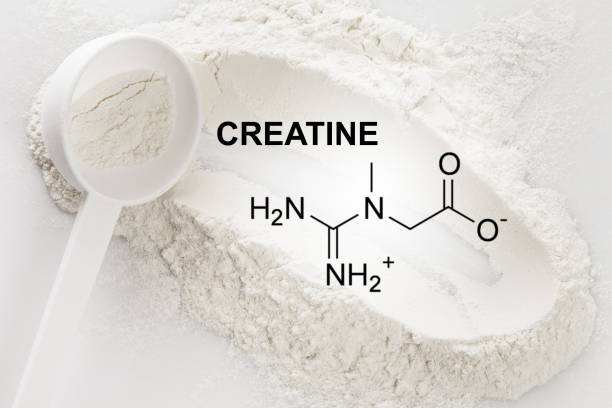
Creatine is probably the most studied supplement in existence. There are hundreds of randomized trials going back forty years. It’s cheap, it’s safe at normal doses, and for resistance training it’s the one supplement that actually does what it says: a few extra reps per set, a few extra pounds of lean mass over months. That part is settled and boring.
The more interesting part is what’s been coming out of the last five or ten years of research on creatine outside the weight room.
What creatine actually does
Creatine is a molecule your body already makes and stores, mostly in muscle but also in the brain. It buffers ATP — the cell’s immediate energy currency. When a cell needs a burst of energy faster than oxidative metabolism can supply, it pulls from the creatine phosphate pool. More creatine means a bigger buffer.
Muscle is the obvious use case because muscle contractions are exactly that kind of burst demand. But the brain is also energetically expensive, and its energy demand spikes under cognitive load and sleep deprivation. That’s the hook for the non-athletic research.
The cognitive findings
The clearest result so far: creatine supplementation (~5g/day) improves cognitive performance specifically in conditions of stress, sleep deprivation, or high mental demand. In well-rested, well-fed young adults on a normal day, the effect is small to nonexistent. In sleep-deprived subjects, in older adults, and in vegetarians (who get less dietary creatine to begin with), the effect is real and reproducible.
A 2023 meta-analysis found small but significant improvements in memory performance, with the largest effects in older adults. There’s also early evidence for mood benefits in depression, though that literature is messier.
The practical version
- 3–5g per day, any form, any time of day. The loading phase is unnecessary unless you want to feel the muscle effects in a week instead of a month.
- Creatine monohydrate is the form every study used. The fancier forms are more expensive and no better.
- The “creatine damages your kidneys” thing is not supported by any trial in healthy people. It does raise serum creatinine (the marker), which can spook a doctor who doesn’t know you’re taking it. Mention it before a blood test.
- Vegetarians benefit more than omnivores, because meat is the main dietary source.
- The cognitive benefit is most noticeable when you’re under-slept. Which, for most of us, is most of the time.
None of this makes creatine a miracle. It makes it a cheap, well-understood tool that does a small useful thing for most people and a larger useful thing for some. That’s a better evidence base than 90% of the supplement aisle.