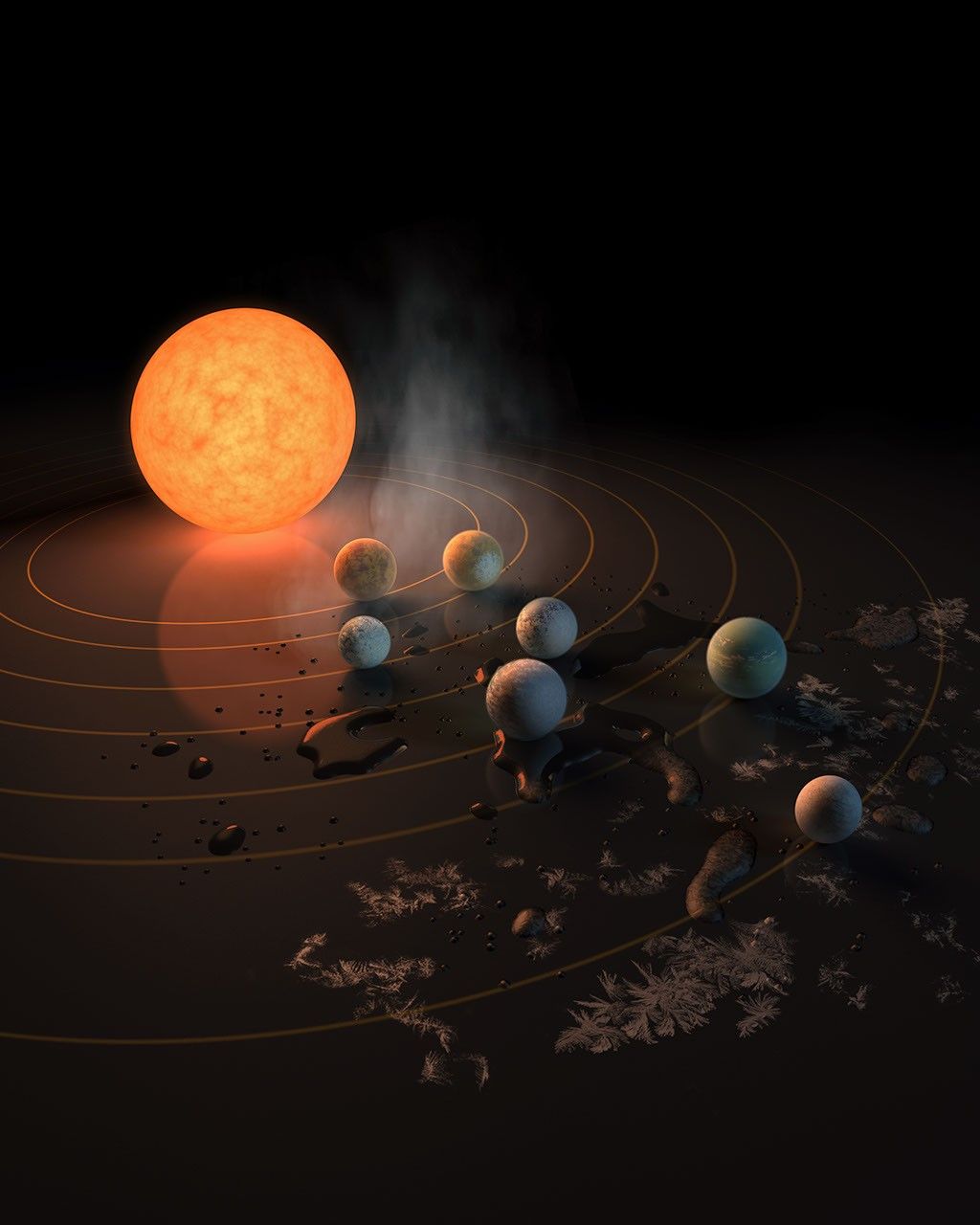
When I wrote about the habitable zone and Kepler's estimate of Earth-like worlds, TRAPPIST-1 was the example I kept coming back to: seven rocky planets, three of them in the habitable zone, all around a single cool dwarf star only 40 light years away. If there was ever going to be a system where we could actually check, it was this one. JWST has now spent two years checking. Here's what it's found so far.
TRAPPIST-1b: no atmosphere worth the name
The innermost planet was the first target, because it's the easiest to observe — hottest, largest signal. JWST measured its dayside thermal emission and found it consistent with a bare rock. No thick atmosphere, no significant CO₂, no heat redistribution to the night side. Essentially, it's Mercury.
This was disappointing but expected. TRAPPIST-1 is an active red dwarf; the inner planets have been blasted with stellar radiation for billions of years, and atmospheres are hard to hold onto under that kind of bombardment.
TRAPPIST-1c: also bare
Second target, same story. The dayside temperature matches a rock with essentially zero atmosphere. If there was ever a thick CO₂ envelope there, it's gone.
TRAPPIST-1e, f, g: the interesting ones are harder
The three habitable-zone planets are harder to observe precisely because they're cooler and further from the star — the signals are smaller and you need many transits to build up signal-to-noise. Observations are still accumulating. The early transmission spectra of e and f are consistent with either thin atmospheres or no atmospheres at all, but the error bars don't yet rule out hydrogen-poor secondary atmospheres (CO₂, N₂) of the kind Earth actually has.
What the non-detections actually mean
This is the part that's easy to get wrong. The bare-rock findings for b and c don't mean TRAPPIST-1 is dead — they mean the inner planets got cooked, which was already the expectation for planets that close to an M-dwarf. The question that matters is whether the outer three held on. JWST is still working on it, and the answer will probably come in pieces over the next three or four observing cycles rather than as one big announcement.
The broader lesson: finding a planet in a habitable zone is cheap now. Finding out whether it has air is slow, expensive, and decided one photon at a time.
Keep reading
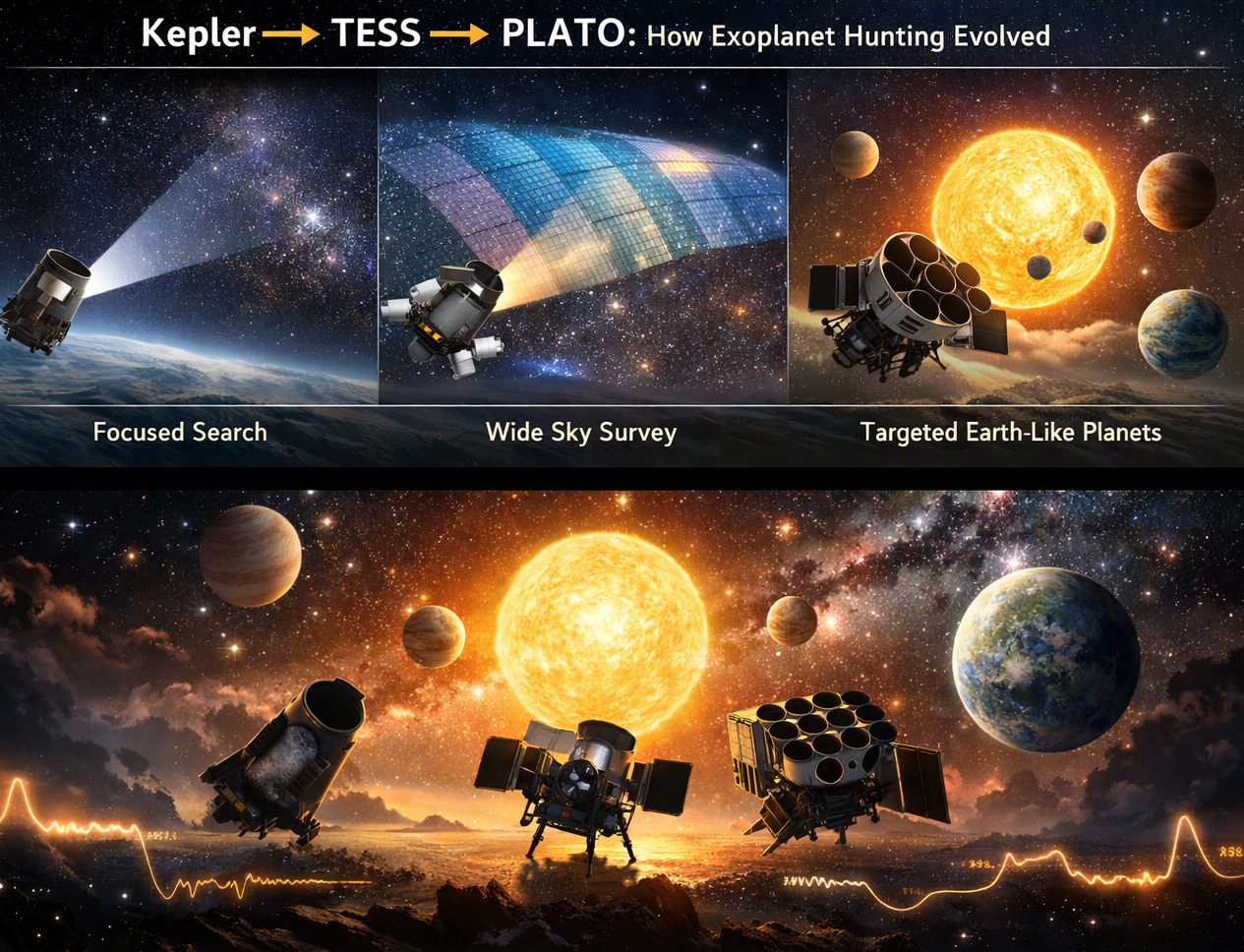
Kepler → TESS → PLATO: how exoplanet hunting evolved
Three transit missions, three different bets, and what each one was actually designed to find.
What's actually worth looking at in the December sky
The winter solstice is here, the air is clear, the nights are long — a short guide to what to look up at.

Why auroras keep showing up where they shouldn't
The sun is at solar maximum and the northern lights are visible from places that haven't seen them in decades.