I've written about tea and your health before, mostly about the antioxidants. But there's a different thing worth talking about: why tea feels different than coffee even when the caffeine dose is similar. It isn't placebo, and it isn't just the ritual. The pharmacology is actually different.
The caffeine curve
A cup of drip coffee has roughly 90–120 mg of caffeine. A strong black tea has 40–70 mg. So part of the difference is just dose. But two cups of tea and one coffee can land in the same range, and they still don't feel the same.
The reason is absorption. Coffee delivers caffeine fast — peak blood levels in 30 to 45 minutes, then a steep fall. Tea delivers it slower, partly because of the tannins, which bind caffeine and let it release more gradually through the gut. The peak is lower and the tail is longer. If coffee is a sharp spike, tea is a plateau.
L-theanine is the other half of the story
Tea leaves contain L-theanine, an amino acid that barely exists in any other common food. It crosses the blood-brain barrier. It increases alpha wave activity — the kind your brain produces in a calm, alert state — and it blunts the stress response caffeine normally triggers.
In studies that dose caffeine and L-theanine together versus caffeine alone, the combination produces better sustained attention with less of the jittery sympathetic activation. The ratio in brewed tea is roughly 1:2 caffeine to L-theanine, which appears to be close to the sweet spot.
So: the caffeine arrives slower, and it arrives with a built-in anxiolytic. That's the whole mechanism. Coffee is a stimulant. Tea is a stimulant plus a relaxant, released slowly, for about four hours.
The practical version
- If you need to be sharp in the next 20 minutes: coffee.
- If you need to be steadily useful for the next four hours without a crash at hour two: tea.
- If you drink tea late afternoon and sleep fine, but coffee at the same hour wrecks you, this is why — not because you're "sensitive to coffee," but because the curve is different.
- Matcha has the highest L-theanine concentration because you're drinking the whole leaf.
None of this is an argument against coffee. I drink both. But the reason tea drinkers sound smug about their "calm focus" is that they're describing a real neurochemical state, and it has a name.
Keep reading

Seed oils: what the evidence actually says
The case against seed oils has gotten huge online. The case in the literature is much more boring.
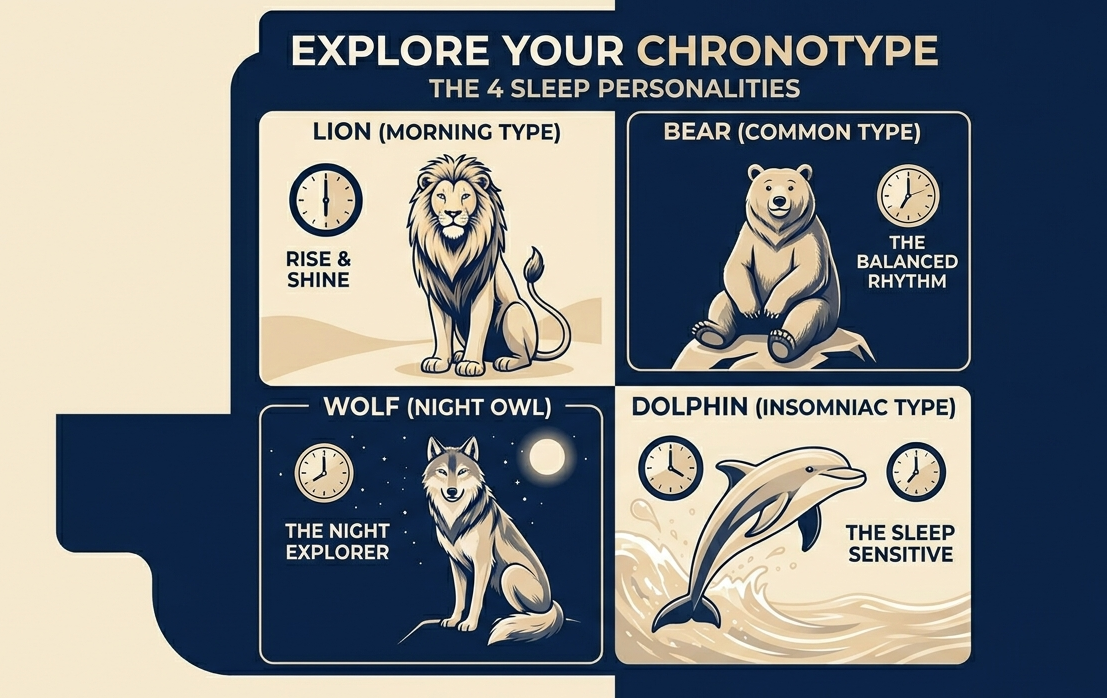
Chronotypes and why your schedule fights you
Morning people and night owls are real. It's genetic. And the 9-to-5 is tuned for about half the population.