Why auroras keep showing up where they shouldn't
The sun is at solar maximum and the northern lights are visible from places that haven't seen them in decades.
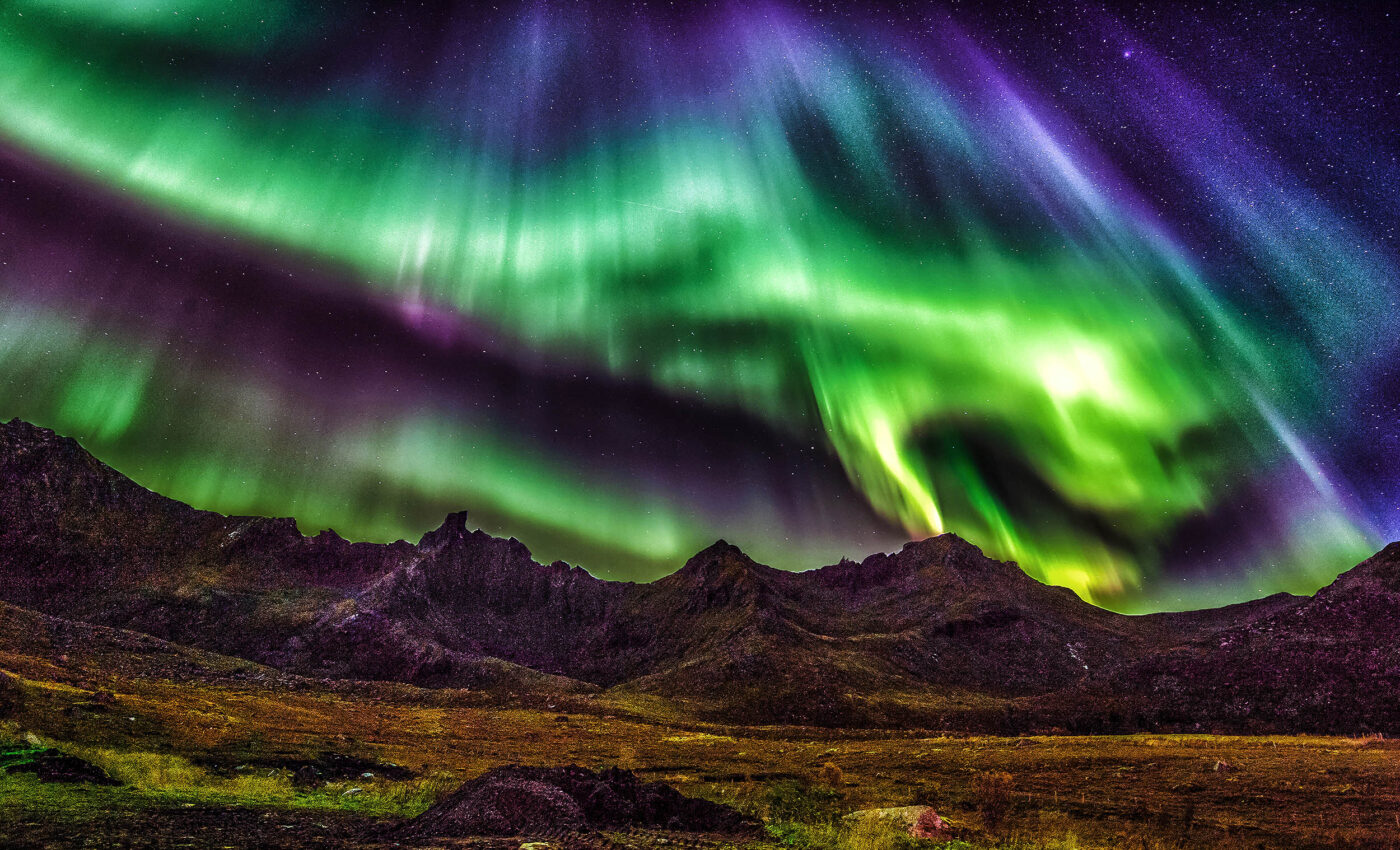
People in Texas, Alabama, and northern Mexico have seen the aurora in the last year. Photos have been coming out of places that historically never see it at all. This isn’t supposed to happen. Auroras are for Alaska and Iceland and the top of Norway. Why are they suddenly showing up in Louisiana?
The short answer: we’re at solar maximum, and it’s a stronger one than anyone expected.
What the solar cycle actually is
The sun’s magnetic field flips roughly every 11 years. As it does, the number of sunspots, flares, and coronal mass ejections rises to a peak — solar maximum — and then falls to a lull — solar minimum. We’re currently in Solar Cycle 25, and the maximum arrived in 2024–2025.
The forecast for Cycle 25, made back in 2019, was that it would be a weak one, similar to the previous cycle. That forecast was wrong. Cycle 25 has produced significantly more sunspots than predicted, and the ones it’s produced have been unusually active. The cause is still being debated. What isn’t debated is that the sun has been throwing out bigger and more frequent coronal mass ejections than anyone expected.
Why a CME makes the aurora drop in latitude
Normally the solar wind plasma gets funneled to the magnetic poles, which is why the aurora lives at high latitudes. A coronal mass ejection is a much denser, faster, more magnetically tangled blob of plasma. When it hits Earth’s magnetosphere, it compresses it, and the auroral oval — the ring where the lights happen — expands south.
A moderate geomagnetic storm pushes the oval into southern Canada. A strong one reaches the northern US. The May 2024 storm, which was the strongest in about twenty years, pushed it all the way to the Caribbean. The October 2024 event was nearly as strong. Several more this year have been smaller but still enough to light up the mid-Atlantic.
When to look
- Watch the Kp index, which rates geomagnetic activity from 0 to 9. Kp 5 means aurora at the US-Canada border. Kp 7 means the northern tier of US states. Kp 8 or 9 means anywhere in the continental US, possibly further south.
- NOAA’s Space Weather Prediction Center posts forecasts 1–3 days out whenever a CME is en route.
- Your phone camera sees more aurora than your eye does, especially in a red-dominated low-latitude display. If your eye sees nothing, take a 3-second exposure and check.
- The peak of Cycle 25 is now, but the tail is long. Expect elevated activity for another year or two before things quiet down.
If you’ve been waiting to see the northern lights, this is the best chance you’ll get until roughly 2035. Don’t wait for a trip to Iceland. Watch the Kp index and drive somewhere dark when it spikes.